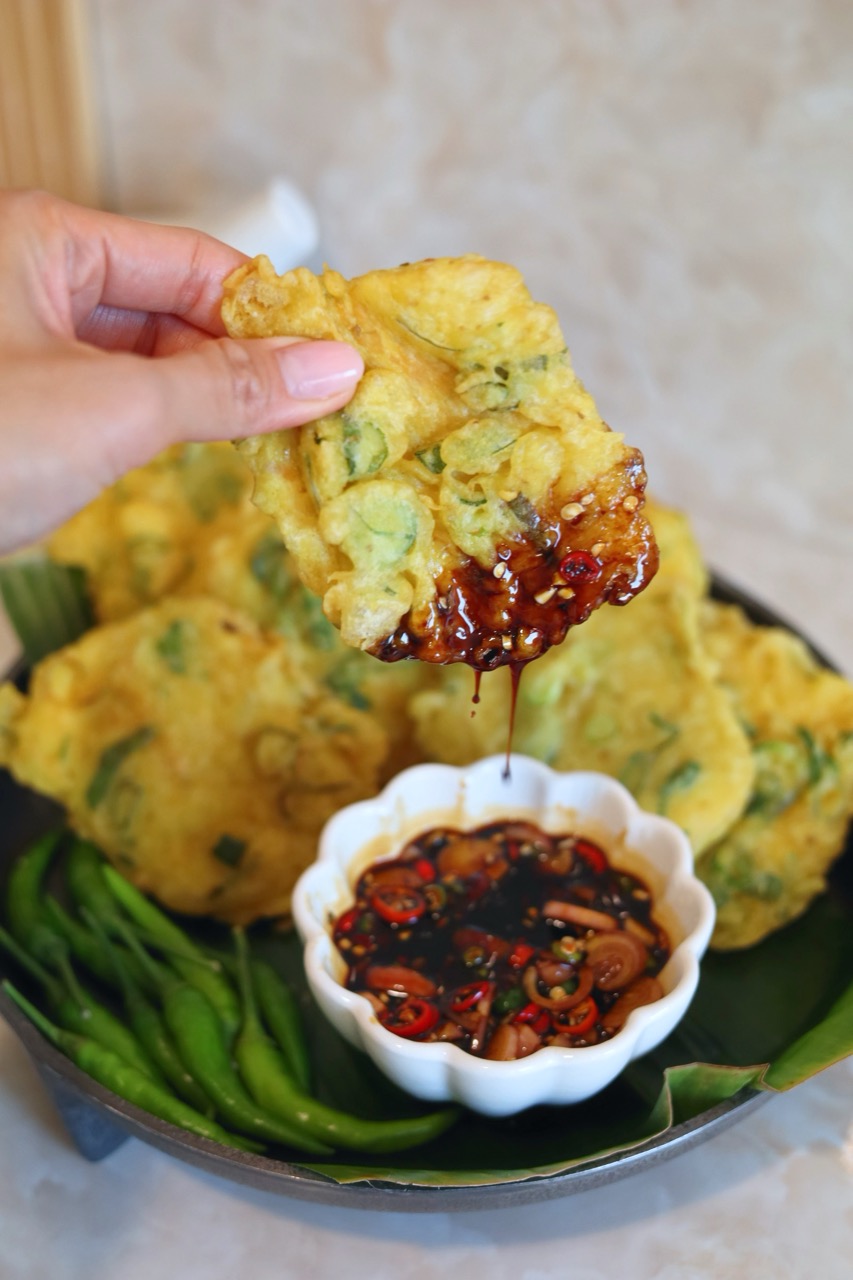
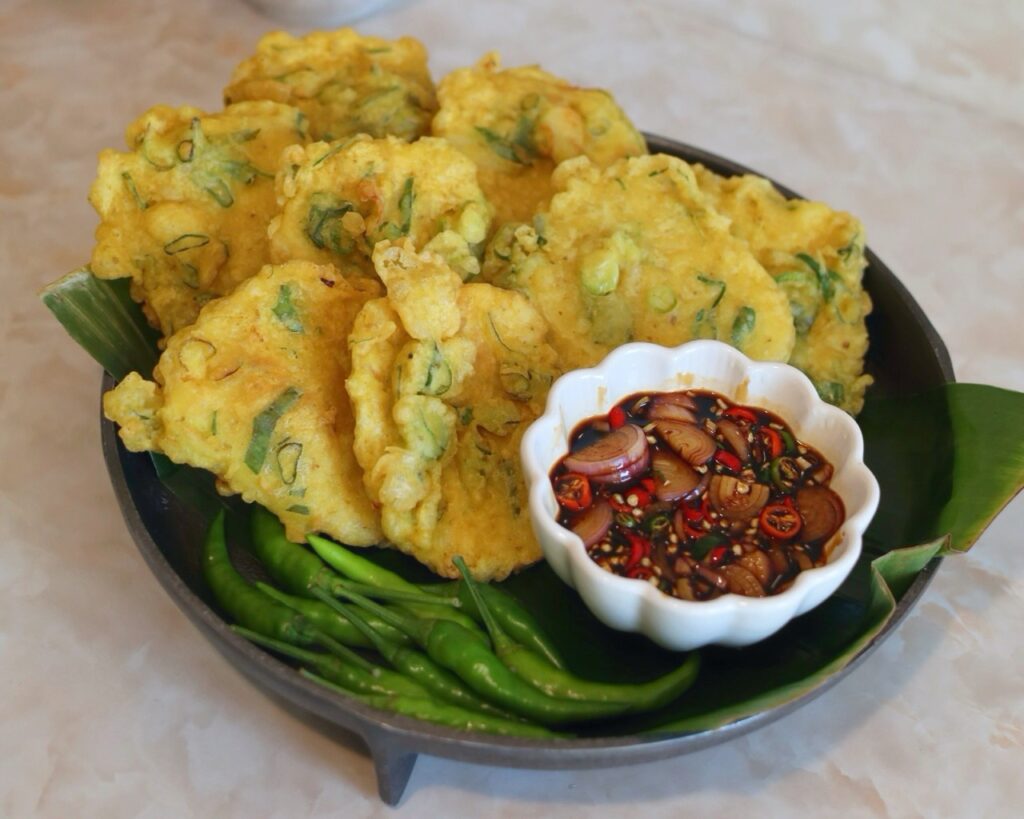
Indonesia’s Beloved Soft-Fried Tempe
If you think tempe is only something you eat as a vegan meat substitute, let me introduce you to a whole different world of tempe! In Indonesia, tempe is so much more than that. It’s an everyday staple, a familiar comfort food, and an ingredient that has earned its place in countless Indonesian kitchens. And one of my favourite ways to enjoy it? Tempe Mendoan!
A Little Story About Tempe
As an Indonesian tempe was never something unusual or particularly fancy. It was simply part of our everyday meals. We’d have it for lunch, dinner, as a snack, or whenever we felt like having something delicious and savoury. It was affordable, accessible, nutritious, and, most importantly, incredibly versatile.
When I moved to Europe, I noticed something quite interesting. Tempe was often introduced as a plant-based meat alternative, particularly in vegan and vegetarian cooking. While there’s absolutely nothing wrong with that, it made me realise how differently we sometimes look at the same ingredient depending on where we come from.
Back home, tempe doesn’t need to pretend to be meat. It is tempe, and we love it just the way it is!
In fact, tempe was always one of the best-selling dishes at my late mother’s warung (traditional Indonesian food stall) in Makassar. Whether it was simply fried, coated in seasoned flour, or cooked with different spices, it was one of those dishes people kept coming back for. It was a humble ingredient that never failed to make people happy.
And that’s one of the things I love most about Indonesian cooking: we know how to turn simple, everyday ingredients into something truly delicious.
Today, I’m sharing Tempe Mendoan, a traditional Indonesian fried tempe dish that deserves a little more attention outside Indonesia.
What Is Tempe Mendoan?
Tempe Mendoan is a traditional Indonesian snack originating from Banyumas, in Central Java. It’s made from thin slices of tempe coated in a lightly seasoned flour batter, usually mixed with garlic, coriander seeds, and fresh spring onions, then quickly fried in hot oil.
Unlike the typical fried tempe you might be familiar with, Tempe Mendoan is intentionally fried until the batter is only partially cooked through, leaving it soft, tender, and slightly chewy rather than completely crispy.
The name mendoan comes from the Banyumasan word mendo, which refers to something that is half-cooked, soft, or not fully fried. And that’s exactly what makes this dish special!
Although it originated in Banyumas, Tempe Mendoan has become popular throughout Indonesia. You’ll find it in traditional food stalls, local markets, restaurants, and even as a homemade afternoon snack.
It’s one of those simple Indonesian dishes that proves you don’t need complicated ingredients to create something memorable.
Why Is Tempe Mendoan Different From Regular Fried Tempe?
If you’ve ever eaten Indonesian fried tempe, you probably know that we have plenty of ways to prepare it. Some are thin and crispy, others are thick and golden, while some are coated in sweet, spicy, or savoury seasonings.
So, what makes Mendoan different?
1. The tempe is sliced very thinly
Traditional Tempe Mendoan uses specially prepared thin, wide sheets of tempe. Unlike regular fried tempe, which is often cut into thicker slices or cubes, these thin slices allow the batter to coat the tempe evenly and give the finished dish its characteristic delicate texture.
2. The batter is part of the experience
The tempe is dipped into a seasoned flour batter, typically made with wheat flour, rice flour, garlic, coriander seeds, spring onions, and water. The batter adds flavour, fragrance, and a soft coating that complements the nutty taste of fermented soybeans.
3. It’s not supposed to be crunchy!
Now, this is important: don’t over-fry your Mendoan!
Unlike most fried snacks where we’re aiming for a beautifully crunchy golden crust, authentic-style Tempe Mendoan is meant to stay soft. The batter is fried briefly, just enough to cook the coating while keeping its characteristic tender texture.
Think of it as the opposite of crispy fried tempe. And trust me, that’s exactly the beauty of it!
You might come across different versions depending on where you eat it. Some people prefer their Mendoan slightly crispier around the edges, while others enjoy it very soft. But the traditional Banyumas-style preparation is all about that signature mendo texture.
Essential Ingredients for Tempe Mendoan
You don’t need an elaborate shopping list to make delicious Tempe Mendoan. Most of the ingredients are simple pantry staples, but each one plays an important role in building its flavour.
Tempe
The star of the dish! Ideally, use traditional Indonesian-style tempe made from fermented soybeans. For authentic Mendoan, look for thin, wide slices specifically prepared for this dish. If you can’t find them, you can slice a regular block of tempe as thinly as possible.
Wheat flour (AP Flour)
This forms the main body of the batter, giving the tempe its soft, savoury coating.
Rice flour
Rice flour helps create a lighter batter and gives the coating a slightly delicate texture. It also helps prevent the batter from becoming too heavy or doughy.
Garlic
A must-have in Indonesian savoury cooking! Fresh garlic gives the batter its lovely aromatic and savoury flavour.
Coriander seeds
Ground coriander adds a warm, earthy, slightly citrusy fragrance that is characteristic of many Indonesian fried snacks.
Candlenuts (optional)
Candlenuts can be used in some versions to add a mild, creamy richness to the spice paste. They’re not essential, but they can add another layer of flavour.
Kencur (optional)
Kencur, also known as aromatic ginger or sand ginger, is a distinctive ingredient in Indonesian cooking. A little goes a long way, adding a fresh, peppery, and slightly earthy aroma.
Spring onions
Finely chopped spring onions are an important addition to the batter. They bring freshness, colour, and a lovely savoury aroma.
Turmeric (optional)
A little turmeric gives the batter a beautiful yellow hue and a subtle earthy flavour.
Salt and water
Salt brings all the flavours together, while water helps you achieve the right batter consistency. For Mendoan, the batter should be relatively thin and pourable rather than thick like a traditional fritter batter.
Cooking oil
Use enough neutral-flavoured oil for frying. Tempe Mendoan is traditionally deep-fried, allowing the batter to cook quickly and evenly.
How to Serve Tempe Mendoan
Tempe Mendoan is best enjoyed freshly fried and while it’s still warm. That’s when the contrast between the fragrant batter and soft tempe is at its best.
In Indonesia, it’s commonly served with one of two accompaniments:
Sambal Kecap
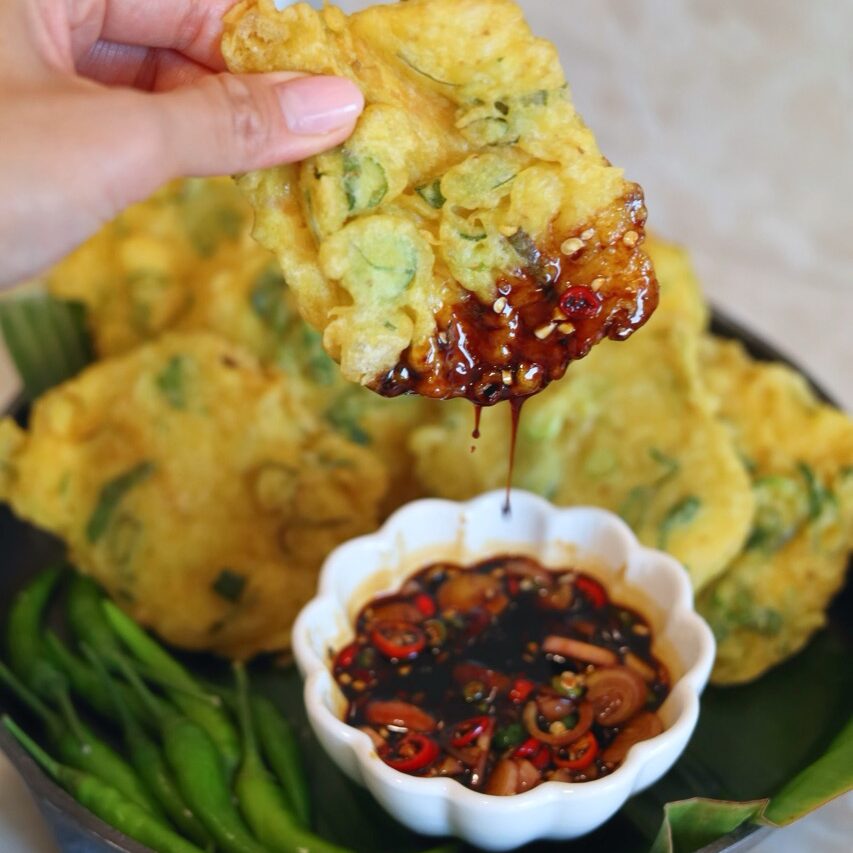
This is my favourite way to enjoy it! Sambal Kecap is a simple Indonesian dipping sauce made with sweet soy sauce (kecap manis), fresh bird’s eye chillies, and sometimes shallots or a squeeze of lime.
The sweetness of the kecap manis, the heat from the chillies, and the savoury Mendoan make such a wonderful combination.
Fresh Bird’s Eye Chillies
For those who love a little extra heat, simply bite into a fresh bird’s eye chilli between bites of Mendoan. It’s a very straightforward way to enjoy it, but absolutely delicious!
You can serve Tempe Mendoan as an afternoon snack (gorengan), an appetiser, or even as a side dish alongside steamed rice, vegetables, and other Indonesian dishes.
And don’t forget a cup of hot tea or coffee. It’s a lovely combination for a relaxed afternoon!
How to Store Tempe Mendoan
Let’s be honest, Tempe Mendoan tastes best straight out of the frying pan. However, if you happen to have leftovers, here’s how to keep them.
Storing cooked Tempe Mendoan
Allow the Mendoan to cool completely, then place it in an airtight container and refrigerate it. For the best quality, enjoy it within 2–3 days.
Avoid leaving cooked Mendoan at room temperature for more than two hours.
Can you freeze it?
Yes, you can freeze cooked Tempe Mendoan, although the texture may change slightly after thawing. Place the cooled pieces in a freezer-safe container, separating the layers with baking paper to prevent them from sticking together. For the best quality, use within 1–2 months.
Storing uncooked tempe
If you’ve bought fresh tempe but haven’t cooked it yet, keep it refrigerated according to the packaging instructions. Fresh tempe can also be frozen if you want to keep it for longer.
How to Reheat Tempe Mendoan
Since Mendoan is traditionally enjoyed soft rather than crunchy, I recommend reheating it gently.
Air fryer: Preheat your air fryer to approximately 160°C. Heat the Mendoan for 2–4 minutes, checking regularly until warmed through. The coating may become crispier than the original.
Oven: Place the Mendoan on a baking tray and reheat at 160°C for approximately 5–8 minutes, or until heated through.
Frying pan: My preferred option if you want to bring back some of that freshly fried flavour. Heat a little oil in a pan and briefly fry the Mendoan on both sides until warmed through.
Keep in mind that reheating will never quite recreate the original freshly fried texture. If you can, make only as much as you plan to eat!
A Little Indonesian Food Culture on Your Plate
For me, Tempe Mendoan is more than just fried tempe. It’s a reminder of how deeply tempe is woven into everyday Indonesian food culture.
It’s the kind of food you’ll find at a neighbourhood warung, on a family dining table, or being freshly fried at a roadside food stall. It’s simple, affordable, comforting, and something that brings people together.
And perhaps that’s what I want to share through Cooking Like a True Indonesian: not just how to recreate Indonesian recipes, but also the stories, traditions, ingredients, and little details that make our food culture so special.
So, the next time you pick up a block of tempe, don’t think of it as just a meat replacement. Think of all the delicious possibilities it holds.
And if you’ve never tried Tempe Mendoan before, I hope this recipe becomes one of your new favourites.
Selamat masak!

Tempe Mendoan
Equipment
- 1 Knife
- 1 Cutting Board
- 1 Large mixing bowl
- 1 Pestle and mortar
- 1 Whisker
- 1 Frying pan/wok
Ingredients
- 400 gr Tempe thinly sliced
- 2-3 stalks Green onion thinly sliced
- Neutral oil for deep frying
Batter:
- 220 gr AP Flour medium protein
- 60 gr Rice flour
- 1/2 tsp Turmeric powder
- 1 Egg
- 1 tsp Baking powder
- 400 ml Water
- 2 tsp Bouillon powder
- 1 tsp MSG
- 1/2 tsp White pepper
- 2 tsp Salt depends on how salty your bouillon powder is. Taste as you go
- 3-4 pcs Kaffir lime leaves (optional) remove the bone in the middle and thinly sliced them.
Spice Paste
- 4 cloves Garlic
- 1/2 tbsp Corriander seeds toasted
Sambal Kecap (dipping sauce)
- 1 pcs Shallot
- 4 pcs Red chili (cabe rawit merah)
- 3 pcs Green chili (cabe rawit hijau)
- 3 tbsp Sweet soy sauce (Kecap Manis)
- 1/4 tsp Salt
- 1/2 tsp MSG
- 1 pcs Kaffir lime extract the juice
Garnish
- Green chilies (cabe rawit hijau)
Instructions
- Cut the tempe into thin, wide slices. Traditionally, tempe mendoan is sliced thinner than regular fried tempeh.
- Make the spice paste. First grind the coriander seeds until smooth and powdery and then grind the garlic with kosher salt. The salt helps to grind the spices quicker.
- In a large mixing bowl, combine the rice flour and all-purpose flour. Add the spice paste and gradually pour in the water while mixing until you get a smooth, slightly runny batter. Stir in the sliced spring onions.
- Dip each slice of tempe into the batter, making sure both sides are evenly coated.
- Heat enough oil in a frying pan over medium heat. Once the oil is hot, carefully place the battered tempe slices into the oil. Fry briefly, approximately 1–2 minutes on each side, until the batter is set and lightly golden but still soft.
- Remove the tempe from the oil and let the excess oil drain on a wire rack or paper towel. Serve immediately while warm with sambal kecap (sweet soy sauce chilli dip) or if you dare to eat it with green chili. Enjoy! 🙂
Leave a Reply